Consolidate international evidence on MCD tests
Early research into multi-cancer detection (MCD) tests is expanding rapidly, but the evidence base remains complex, inconsistent, and difficult for clinicians, policymakers, and the public to navigate. Evidence consolidation and critical appraisal are essential to understanding the true potential of these new technologies, especially as studies vary widely in quality, design, and reporting.
Many current studies can be difficult to interpret because versions of the MCD tests may change between studies, key information about how well an MCD test works is not always clearly reported, or people included in the study don’t represent the wider population.
To address these challenges, as part of the MCD Spotlight work, we will scan and assess the evidence on MCD tests. These scans will consolidate emerging evidence, evaluate study quality, and highlight what is known, and still unknown, about test performance and readiness for potential real-world use.
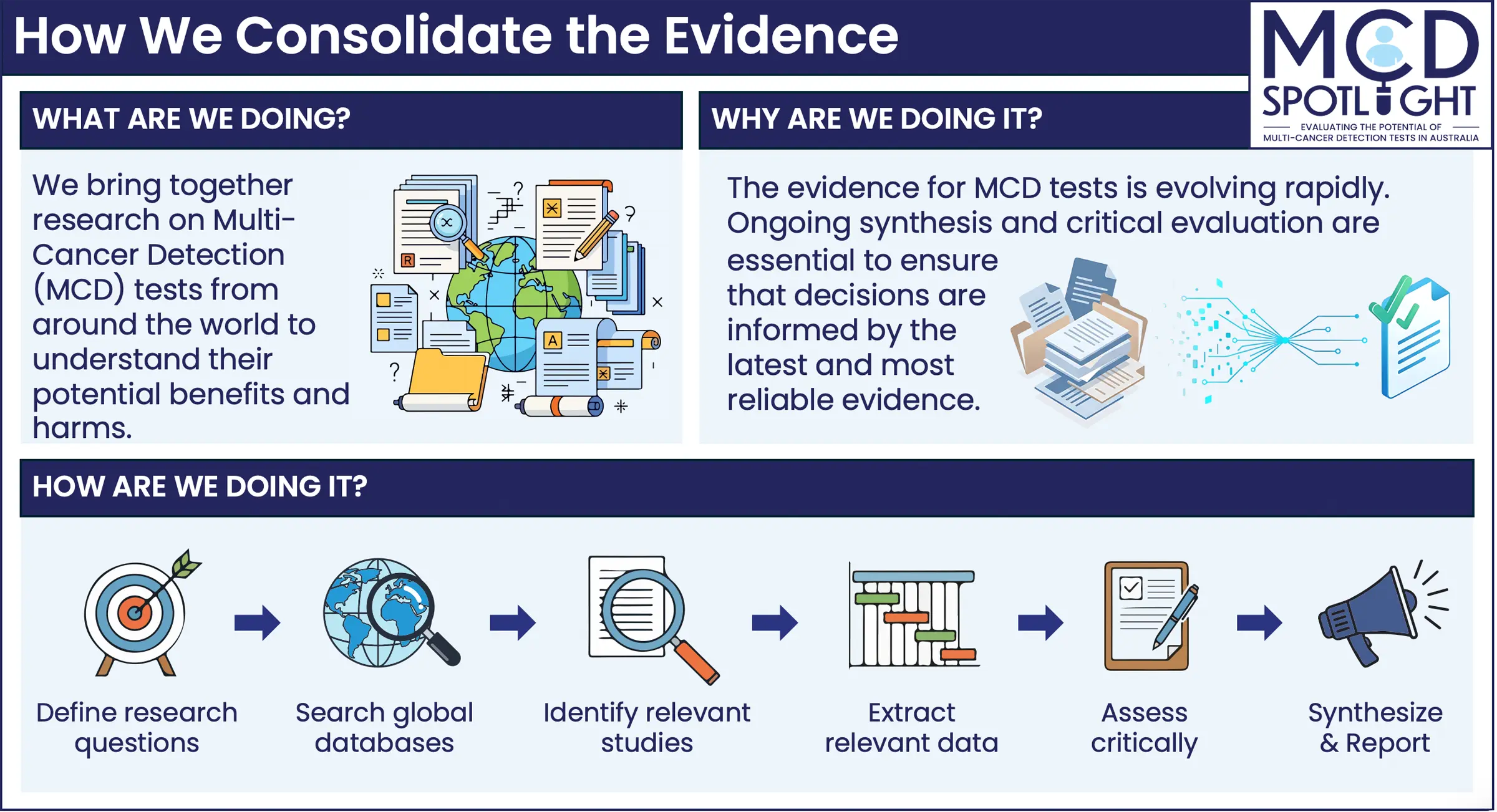
Our team brings extensive expertise across genomics, MCD technologies, health policy, and the synthesis of large, complex evidence bases. Together, we will assess the rapidly evolving international research landscape to identify trends, limitations, and promising developments.
Importantly, each scan will highlight key considerations for Australian policy and practice, informed through consultation with interest-holders including the public, health professionals, and policy experts.
This work will provide a clear, up-to-date foundation for understanding how MCD tests are developing globally and how they might contribute to earlier, more effective cancer detection in Australia. The results will directly inform our work in all other components of the MCD Spotlight program, including the final Roadmap recommendations.
The evidence synthesis is led by A/Prof Julia Steinberg (Daffodil Centre), in collaboration with other Investigators and the Research Team.